Every job below is one we do ourselves across Waukesha.
We dig and pour footings below Wisconsin's frost line, usually around 42 inches, so the deck doesn't heave when the ground freezes and thaws. Framing runs 2x8 or 2x10 joists at 16 inches on center, hung with galvanized or stainless hangers depending on what's touching the ground. We'll walk you through pressure-treated, cedar, or composite decking before anything gets ordered.
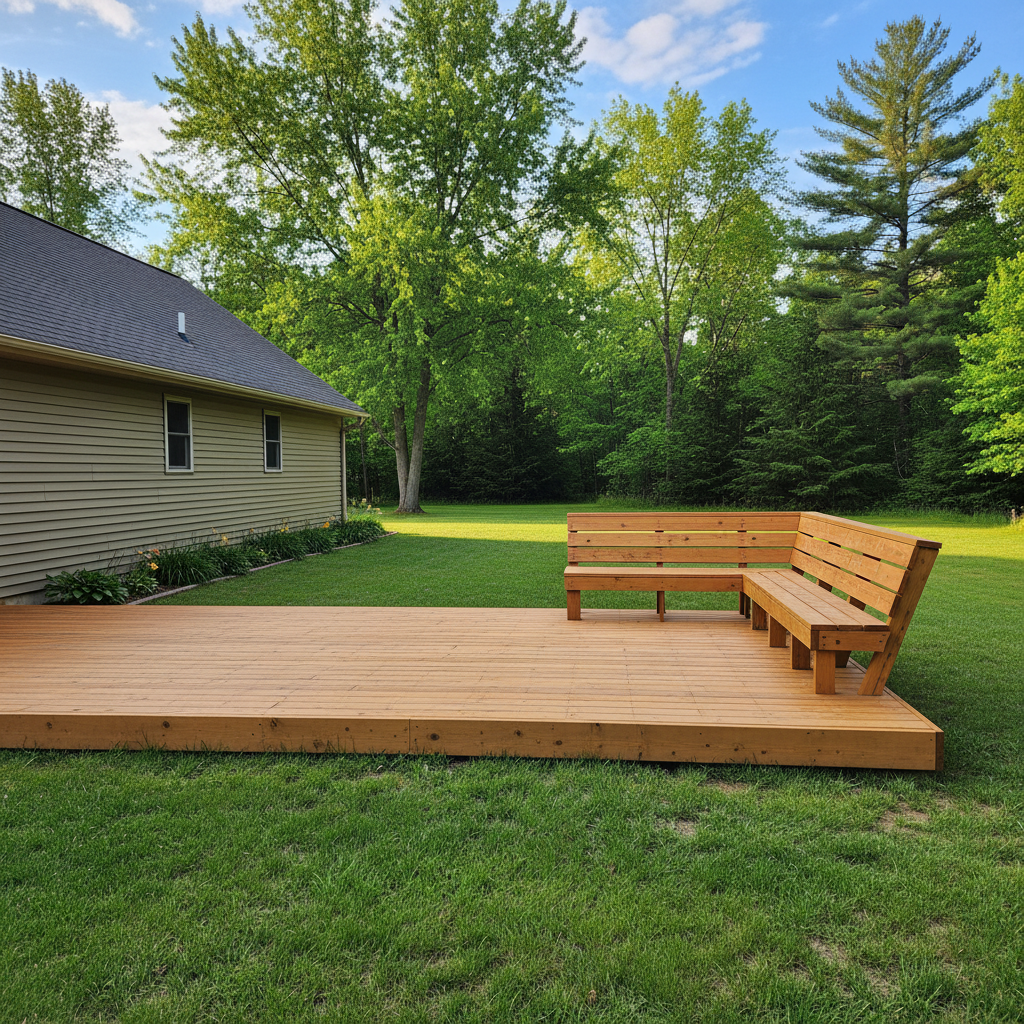
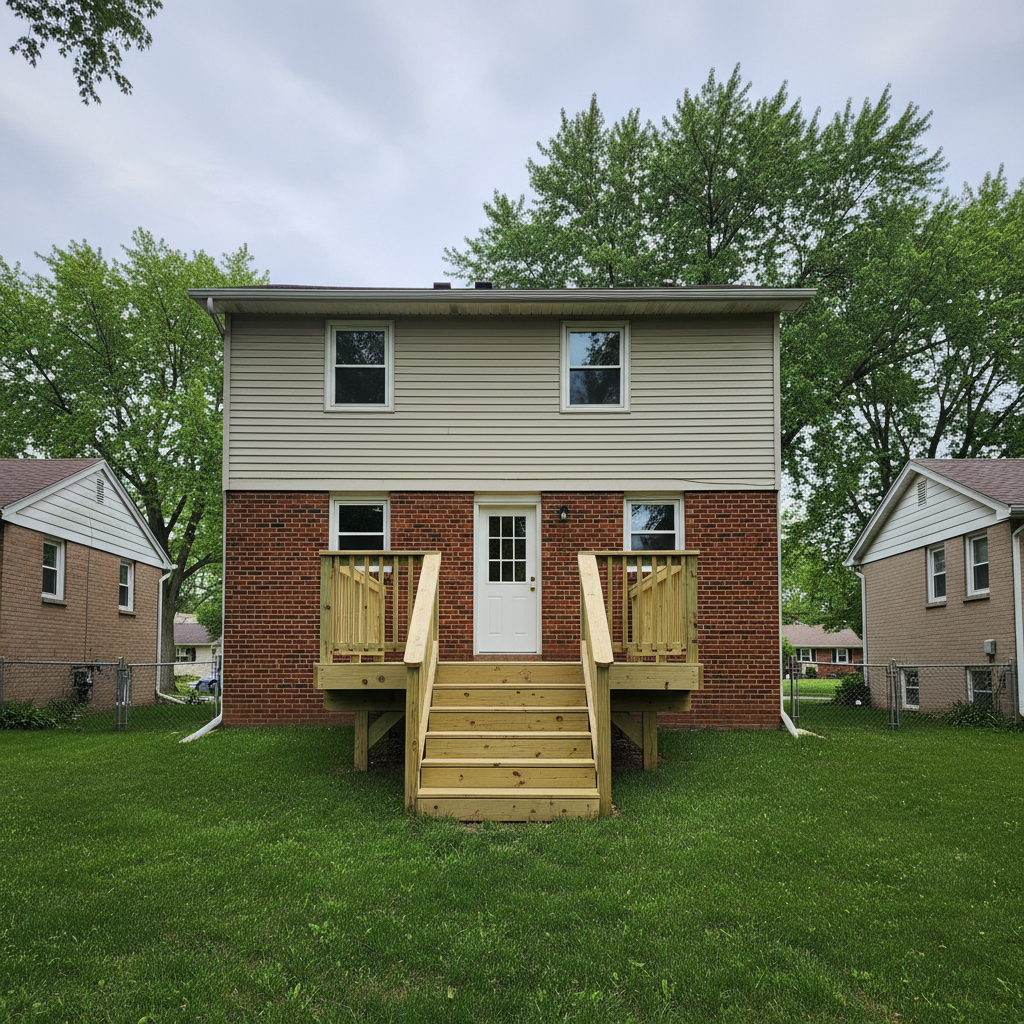
Some yards call for a second level, a wraparound bench, or stairs that land somewhere other than straight off the back door. We draw it out and run the numbers on footings and beam spans before we ever cut a board. If you've got a slope, a walkout basement, or a pool to work around, that's the kind of layout we like to solve.
Bouncy spots usually mean a joist has twisted or a hanger has rusted through, and we replace what's bad instead of sistering over it and hoping. Railings that wiggle almost always trace back to a post that was never bolted to the frame, just toe-nailed. We fix the failure point, not just the symptom you can see.
We pressure wash, let the wood dry for a couple of days, then sand anything that's gone gray before staining. A semi-transparent oil-based stain is what we recommend for pine or cedar in this climate, reapplied every 2 to 3 years. Skip this step and the end grain soaks up water, which is where rot starts.
Composite boards like Trex or TimberTech don't require staining and resist the splintering that pressure-treated pine gets after a few summers. The framing underneath still has to be built right, composite is only as good as the joists holding it up. We use hidden fastener systems on most composite jobs so you don't see a screw head on the surface.
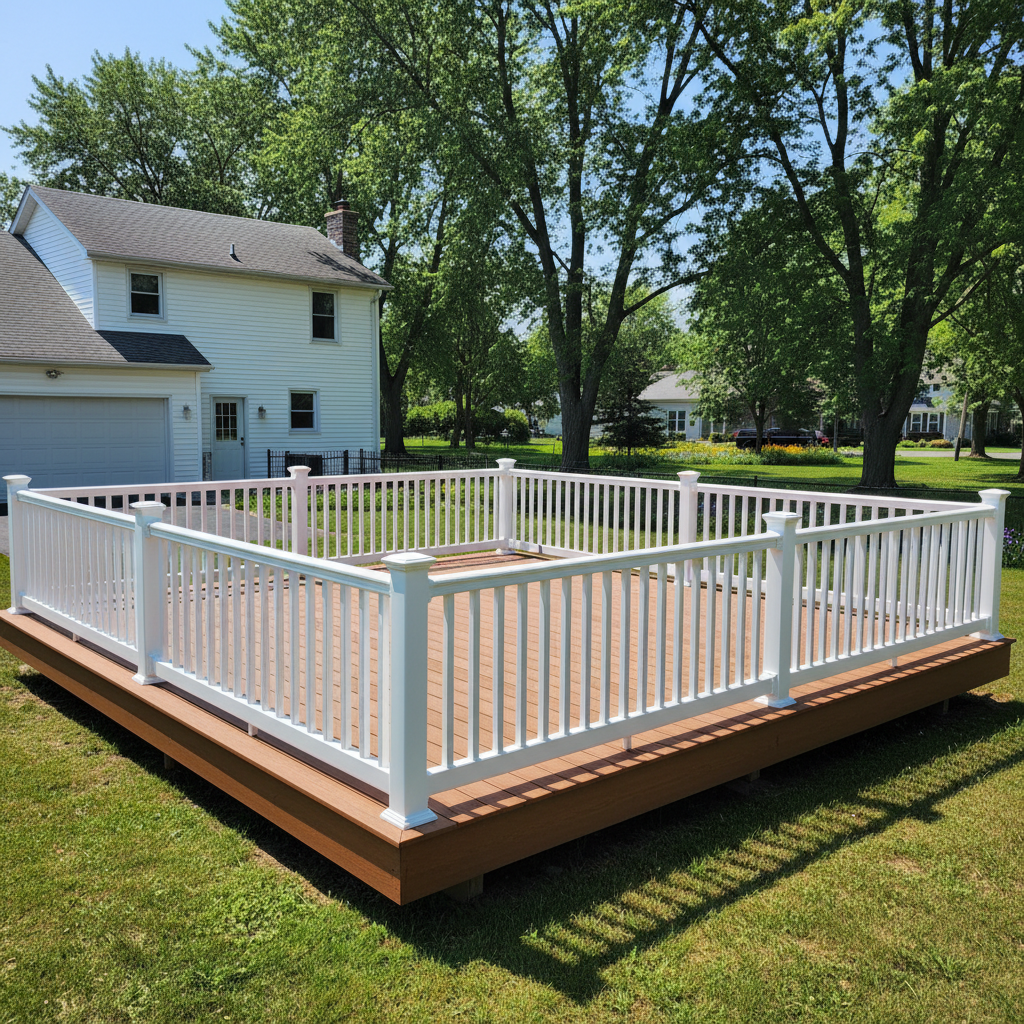
Wisconsin code generally calls for 36 inch railings on residential decks, with baluster gaps no wider than 4 inches so a small child can't slip through. We've torn out plenty of railings that were never through-bolted to the rim joist, just screwed into the decking. Cable rail, horizontal board, and standard baluster styles are all on the table.
If the frame underneath is still solid, a whole new deck isn't necessary, just new decking boards and fascia. We check every joist before resurfacing anything, there's no point putting new boards over wood that's already failing. This is usually the cheaper route if your deck is under 15 years old and the structure checks out.
Some decks are past saving, especially if the ledger board has been leaking into the house for years. We tear it out, haul the old lumber away, and check the rim joist and siding behind it for water damage before anything new goes up. Better to find that problem now than after the new deck is built on top of it.
Post cap lights, step lights, and under-rail LED strips get wired in while the deck is open, before the decking goes down for good. Low-voltage systems are what we install most, they're safer around wet boards and cheaper to run. We can also retrofit lighting into an existing deck if the framing allows it.
A lot of our deck clients end up asking about screening in part of it once the mosquitoes show up in July. We frame the screen porch addition to tie into the existing deck structure instead of building it as a separate project. It's a bigger job than a standard deck, with its own roof line and footings to plan for.
Four steps, and no surprises in any of them.
You tell us what you want doing, we look at what is actually there, and we ask the awkward questions early.
In writing, itemised, free. If something might add cost later we flag it now rather than at the end.
Same crew throughout. We cover your floors, keep the dust down and tidy up before we leave each day.
You point out anything you are not happy with and we fix it before the invoice, not after.
These are the towns where quoting and scheduling are straightforward, call to check anywhere close by.
Questions that come up once a deck project is actually underway.
Describe the problem and we will tell you what it probably is. No obligation.